


Article Contents
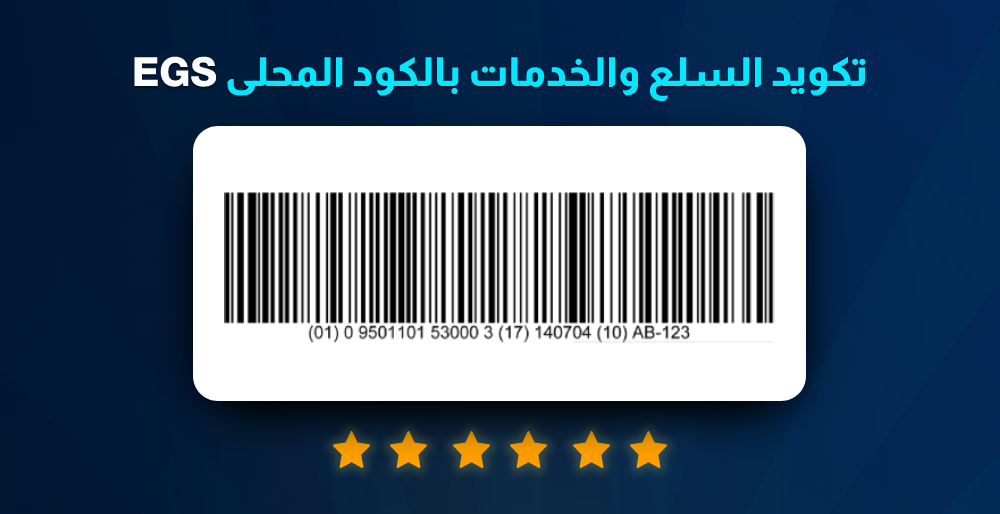
Between implementing the E-invoicing system and changing daily work practices within companies, an unexpected challenge emerged: coding goods and services within the electronic portal.
Today, dozens of companies are surprised when their invoices get rejected due to simple errors in item codes, leading to disrupted collections, loss of valuable time, and possibly facing fines.
This is where EGS codes emerged as a suitable option, enabling companies to implement coding easily without additional costs or complex procedures.
In this article, you’ll learn step-by-step how to create and register EGS codes correctly, how to ensure your invoices are accepted from the first time, and how you can simplify all of this using the “eDariba” platform, which makes the process take only minutes.
1. What Are EGS Codes (Egyptian Goods and Services)?
EGS codes are a local Egyptian coding system, officially approved by the Egyptian Tax Authority, that allows companies to define goods and services within the E-invoicing system in a unified, accurate, and non-repetitive manner.
This system serves as the appropriate alternative to GS1 global codes, especially since it’s free or low-cost and easier to use within the Egyptian market.
Components of EGS Codes:
EGS codes consist of 3 main parts that ensure their uniqueness and compliance with tax requirements:
Fixed Segment “EG”
This is a prefix indicating that the code belongs to the Egyptian local coding system. It represents the identity of the system itself and always comes at the beginning of any code. Example: “EG-…”
Company Tax Registration Number This part links the code to the establishment owning the goods or services. This way, the code becomes legally linked to the business owner and cannot be repeated between different companies. Example: “EG-123456789-…”
Internal Code for Item or Service Within the Company This is the number or symbol the company itself uses to identify the product or service in its internal system. The company attaches it to the previous components to make the final code ready for use within the system.
Example: “EG-123456789-045” where 045 is the internal code or item number within the company’s system.
EGS Codes and Their Importance in the E-Invoicing System
EGS codes are one of the fundamental pillars of the E-invoicing system in Egypt, and with the system’s expansion and more activities becoming mandatory, relying on accurate codes has become a critical factor in keeping daily operations running without disruption. The importance of these codes becomes clear in:
Ensuring Invoice Acceptance Without Rejection
Codes are an essential part of automatic invoice verification within the tax portal—any error in code structure—such as using an unregistered or non-matching code—directly leads to invoice rejection. This means code accuracy is a fundamental requirement to complete the issuance, review, and acceptance cycle.
Maintaining Company Cash Flows
The customer cannot prove the invoice in their system until it’s officially accepted. Therefore, invoice rejections result in collection delays. For large companies relying on strict approval cycles, delayed invoice acceptance affects the company’s cash flow.
Avoiding Tax Violations
Repeated coding errors or using codes that don’t meet standards may expose the company to fines if considered tax evasion or non-compliance with required procedures. Thus, proper use of codes is part of tax compliance, not just administrative work.
Standardizing Goods and Services Definition Between Parties
Many companies face the problem of different product names between suppliers and clients, causing matching difficulties. EGS codes provide a unified standard that makes the product known in the same way by all parties, thus reducing errors and making financial and accounting matching more accurate and smooth.
Important Note
Having internal codes is not enough to issue an acceptable electronic invoice—the Tax Authority doesn’t recognize any code unless it’s registered within the official coding system. Therefore, using EGS codes is the method that transforms your internal codes into tax-recognized symbols, ensuring invoice acceptance from the first time and facilitating tax review and daily operations within your company.
Read also: Decoding Item Codes: Your Complete Guide to Coding Goods and Services in E-Invoicing
2. How to Register EGS Codes on the E-Invoicing System Step by Step
To successfully register EGS codes and ensure your invoices are accepted, you must follow a specific path starting from data preparation and ending with linking the approved code to your company system. Here are the steps in detail:
First: Required Preparations (Before Starting)
Make sure you have an active account for your company on the E-invoicing Portal, and prepare the following data for each item:
- Tax Registration Number: Your company’s number
- Internal Code (SKU): Any symbol or serial number you use to distinguish the item within your company
- Item Data: Name and description (in Arabic and English), expiration date if applicable
- Global GPC Code: The classification corresponding to your item; you can obtain it through the GPC Browser search
Second: Registration Steps on the System
- Access the Portal: Log in with your company credentials, then go to “Codes” or “Code Management” section.
- Select Coding System: Click on “Register Code Usage,” and from the dropdown menu choose “EGS,” then select “New Registration.”
- Enter Item Data and Global Link: * Enter the internal code (Internal Code), name, description, and unit (piece, carton, etc.).
- Crucial Step: Enter the global GPC code you obtained to link it with your local code for code reliability.
- Submit Request: After reviewing the data, click “Request Approval.”
Third: Monitoring Approval Status (Waiting Period)
After submitting the code, activation speed varies based on code type:
- Immediate Approval: Automatic for codes starting with 622 (globally pre-registered codes).
- Under Review: Your company’s specific EGS codes may take approximately 15 days for review and approval from the Egyptian Tax Authority.
- Note: If you need to issue an invoice immediately and the code is still under review, you can temporarily use a GS1 code as a compensatory solution.
Fourth: Linking Approved Code to Company System
After seeing “Approved” status on the portal:
- Copy the final approved code and link it to the item in your ERP system or accounting software.
- Test issuing a sample invoice to ensure the code appears in the correct fields.
- Remember to update codes or request new reviews when adding new products or changing current product descriptions.
Additional Tips for Ensuring Compliance
- Bulk Registration: To save time, you can upload hundreds of items at once by downloading and filling out the Excel file available on the portal.
- Technical Support: For help obtaining GPC codes, you can contact the Egyptian Tax Authority via email:
einvoice@gs1eg.orgor hotline16395.
eDariba Tip: Skip the hassle of manual searching and waiting periods—eDariba provides you with a smart search engine that suggests correct GPC codes automatically and links them to your system in seconds, ensuring 100% invoice acceptance without technical errors.
Save time and create codes automatically with eDariba now
Download E-Invoice Codes Guide PDF
To simplify the coding process and understand the required standards, you can download the official guide from the Egyptian Tax Authority in PDF format. This guide contains a detailed explanation of how to structure and classify codes.
Download E-Invoice Codes Guide (PDF)
3. Comparing EGS Codes vs. GS1 Codes for E-Invoicing
The choice between EGS and GS1 codes depends on your company’s nature of business and transaction volume. The following table highlights the main differences between the two systems:
| Aspect | EGS Codes (Local) | GS1 Codes (Global) |
|---|---|---|
| Cost | Completely free; no fees for issuance. | Paid; requires annual purchase fees and renewal based on number of codes. |
| Geographic Scope | Local; recognized only within Egypt (Egyptian Tax Authority). | Global; recognized in over 116 countries worldwide. |
| Ease of Use | Requires manual configuration effort and GPC linking. | Very easy; code ready for immediate use upon purchase. |
| Product Tracking | Limited; internal tracking and general classification linking. | Advanced; unique and precise tracking through global supply chain. |
| Tax Compliance | 100% compatible with E-invoicing system. | 100% compatible with E-invoicing system. |
| Code Structure | EG + Tax Registration Number + Internal Code. | Consists of 13 digits (GTIN), usually starting with 622. |
| Technical Linking | Required; code must be manually linked to GPC standards. | Automatic; no additional linking needed (integrated). |
| Approval Speed | Takes approximately 15 days for Tax Authority review. | Immediate approval; accepted on the system upon entry. |
| Accuracy | Internal codes may differ between companies. | Unique; code impossible to replicate for any other product globally. |
| Responsible Entity | Egyptian Tax Authority. | GS1 Global Organization. |
How Does eDariba Help You Register E-Invoice Codes Easily?
The eDariba platform is an integrated system for managing E-invoicing and coding in Egypt, relied upon today by over 1,000 companies to manage their tax obligations easily.
Creating Codes Easily Without Technical Experience
eDariba simplifies the entire coding process, so any new user can create a correct EGS code compliant with the Tax Authority in just minutes.
Through a simplified framework that hundreds of companies have already benefited from, users can add basic data while the platform automatically builds the required code format.
Finding Appropriate GPC Code Without Tedious Manual Search
Instead of manually browsing thousands of classifications, eDariba uses a smart recommendation engine that helps you find the appropriate GPC code based on product description.
This step significantly reduces error rates, which has been reflected in improving company efficiency by up to 95% after adopting the platform.
Validating Codes Before Submission
Every code you work with through the platform is reviewed to ensure it meets Tax Authority standards, which minimizes code rejection cases and consequently invoice rejections.
Direct Linking to Tax System Without Manual Steps
Once the code is created, the platform handles uploading it to the system and monitoring its approval status, saving companies time and effort.
Centralized Management of All Codes in One Place
The system provides a dashboard that lets you manage all item and service codes, with the ability to easily modify or update them. This has been essential in improving the efficiency of companies using eDariba and making the compliance process much simpler.
Keeping Up with Tax Authority Updates Immediately
Any official update issued by the Tax Authority is automatically applied to the platform, ensuring every code you create remains accepted and always compliant—without needing to monitor changes yourself.
Register on eDariba and try automatic coding yourself
Finally, compliance with the E-invoicing system remains an essential step for every company wanting to work legally and organized within the Egyptian market.
With multiple rules and the strict standards of the Tax Authority, relying on a smart and reliable system like eDariba becomes the easiest way to activate coding without errors or complications.
The platform provides ready-made tools, immediate updates, and a simple user experience that helps you complete your tasks in minutes instead of hours of manual searching and review.
Whether you’re starting for the first time or expanding your business, eDariba makes coding easier, faster, and more accurate than ever before.
Try eDariba for free now and start your first code in minutes